

A Tale of Two Protests: The United States and Iran
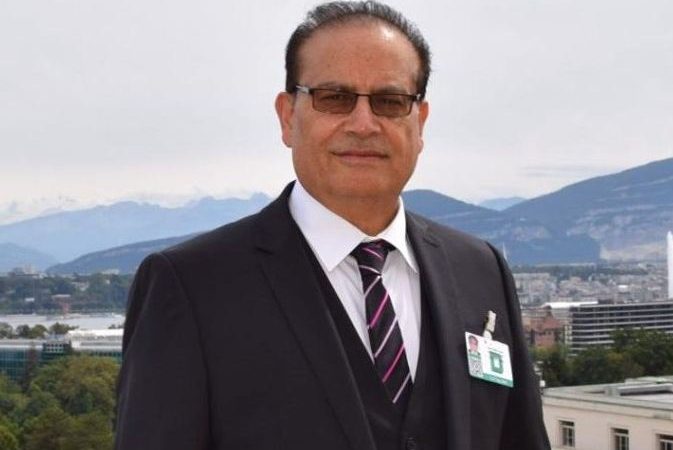
Qamar Bashir
Across two very different geographies, two very different political systems, and two very different societies, demonstrations are unfolding that strangely mirror each other in spirit while diverging sharply in treatment and global reaction. One is taking place inside the United States, across nearly a thousand cities, towns, and metropolitan centers. The other is unfolding in Iran, a country long accustomed to protests, sanctions, and foreign pressure. Together, they tell a single, uncomfortable story about power, sovereignty, and the selective morality of intervention.
In the United States, protests erupted following a series of aggressive Immigration and Customs Enforcement actions that, according to eyewitness accounts and local officials, have crossed legal and ethical boundaries. These actions were ostensibly aimed at undocumented immigrants, yet in practice they have ensnared legal residents and U.S. citizens alike. The tipping point came after a fatal incident in Minnesota, where an ICE operation ended with the shooting death of a white American woman during a traffic confrontation in snowy conditions.
According to preliminary accounts circulated by local media, ICE agents, masked and operating in unmarked vehicles, attempted to redirect traffic during an enforcement operation. The woman, unable to comply immediately due to icy road conditions, requested time to maneuver safely. She was ordered out of her vehicle, refused out of fear and confusion, and as she attempted to reposition her car, she was shot twice and killed. The incident ignited national outrage not only because of the death itself, but because it crystallized a fear long voiced by minority communities: that federal power is now being exercised without restraint, identification, or judicial oversight.
The reaction was swift and unprecedented. Demonstrations spread from Minnesota to Chicago, Los Angeles, New York, and Washington, D.C., with tens of thousands marching toward federal buildings and, in the capital, toward the White House itself. In New York, protesters gathered near Trump Tower, chanting against what they called “state violence against citizens.” One tearful demonstrator, when asked why he was crying, said he had never imagined living to see a day when the federal government would openly kill its own people and face no immediate accountability.
State and city governments responded with alarm. Governors and mayors in Illinois, California, and New York openly challenged the federal deployment of ICE and National Guard units, pledging to use legal and administrative means to block further operations. Legal scholars noted that ICE actions appeared to violate long-established requirements for warrants, identification, and probable cause. The image of masked agents operating without visible authority evoked comparisons to authoritarian regimes the United States has historically condemned.
Yet this domestic unrest is not occurring in isolation. The same assertive, coercive posture has been projected outward. The world watched in disbelief as the United States escalated its confrontation with Venezuela, culminating in what many international observers described as the effective seizure of a sovereign state’s leadership and economic arteries. By detaining President Nicolás Maduro and asserting control over Venezuelan oil exports, Washington did not merely target an individual but placed an entire nation under de facto custody.
Senior U.S. officials publicly stated that Venezuela’s oil sector would be reorganized under American oversight, with proceeds used to compensate U.S. companies nationalized during earlier Venezuelan reforms. More than six oil tankers were reportedly intercepted or frozen, and oil valued in the billions of dollars was declared subject to U.S. strategic use. Even Chinese and Russian-linked vessels were halted, a move that signaled how far Washington was willing to stretch maritime and economic power.
Strikingly, China and Russia limited their response to measured warnings. Analysts noted that both powers may see strategic advantage in allowing Washington to normalize such behavior, thereby creating precedents they could later invoke in Taiwan or Ukraine. What appears as silence, in this reading, is calculated patience.
A similar logic underpins Washington’s renewed rhetoric about Greenland, an autonomous territory within the Kingdom of Denmark. Statements suggesting U.S. acquisition of the island, justified by security and resource concerns, shocked European capitals. Europe now faces a sobering realization: reliance on American security guarantees does not shield allies from coercion. In fact, it may invite it.
This realization has led to a quiet but significant shift in European thinking. Long-standing assumptions about the permanence of U.S. protection are eroding. As an old diplomatic aphorism goes, being an enemy of the United States is dangerous, but being its friend can be even more so.
Against this global backdrop, Iran presents the third and most instructive case. Protests inside Iran have intensified following economic hardship exacerbated by sanctions and the sharp devaluation of the national currency after the recent twelve-day conflict involving Iran, Israel, and the United States. The war shattered long-held perceptions of Israeli invulnerability and exposed the extent to which regional defense architectures are designed to preserve Israeli security at all costs.
Iranian protests are not new. In 1953, mass unrest, fueled and guided by British and American intelligence, led to the overthrow of Prime Minister Mohammad Mossadegh and the installation of Shah Mohammad Reza Pahlavi. In 1979, another wave of popular mobilization toppled the Shah himself, ushering in the Islamic Republic under Ayatollah Khomeini. Since then, Iran has endured decades of sanctions that have hollowed out its economy while entrenching powerful elites.
Today’s protests are driven by familiar grievances: inflation, unemployment, social restrictions, and fatigue from perpetual isolation. Yet the international response could not be more different from that toward U.S. demonstrations. When Americans protest federal violence, no foreign power threatens intervention. No missiles are readied, no sanctions imposed, no leaders warn that force will be used to “protect demonstrators.”
In Iran’s case, however, senior U.S. officials openly warned that any crackdown would invite retaliation. History suggests that such “retaliation” rarely harms ruling elites and almost always devastates ordinary citizens. Bombs do not discriminate between policymakers and shopkeepers. Sanctions do not skip children.
The moral inconsistency is stark. If sovereignty is inviolable in the United States, it must be inviolable everywhere. If regime change must be organic and driven by citizens in Washington or Minnesota, the same principle must apply in Tehran. Iranians, like Americans, have proven repeatedly that when they truly want change, they can achieve it themselves.
The lesson emerging from these parallel demonstrations is painfully clear. Interference in the internal political, social, and cultural dynamics of sovereign states produces not stability but chaos. It fuels violence, poverty, displacement, and mass migration. It creates cycles of despair that spill across borders and generations.
Peace will not come from dismantling international institutions or bending them to the will of the powerful. It will come from strengthening international law, respecting sovereignty, and allowing peoples, everywhere, to determine their own futures. Until that lesson is learned, the streets of Minnesota and Tehran will continue to echo each other, separated by continents but bound by the same unanswered question: who guards the people when power runs unchecked?
Qamar Bashir
Press Secretary to the President (Rtd)
Former Press Minister, Embassy of Pakistan to France
Former Press Attaché to Malaysia
Former MD, SRBC | Macomb, Michigan
Related News

Manufacturing Reality
Syed Shujahat Ali For much of the twentieth century, the ability to shape public opinionRead More

When the Mountains Weep
By Muhammad Mohsin Iqbal Hollywood is second to none in producing films of action, suspenseRead More
Comments are Closed