

Field Marshal’s Strategic Offer to the Muslim World
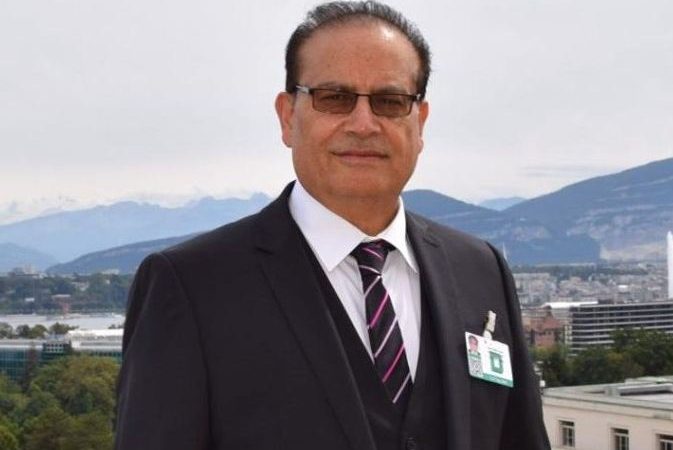
Qamar Bashir
During his recent visit to Libya, Pakistan’s Field Marshal addressed a high-level gathering that included senior Libyan leaders and top military officials. What he presented was not a routine diplomatic message but a strategic doctrine shaped by Pakistan’s own experience of war, sanctions, and pressure. He reminded the audience that Pakistan learned long ago that depending on foreign military technology becomes dangerous when the nation faces existential threat. In moments of conflict, supplier nations often convert technology into leverage—delaying or freezing spare parts, blocking software updates, halting ammunition supply, or suspending technical support. When the survival of the nation hangs in the balance, such dependency can turn fatal. That is why Pakistan deliberately chose to minimize reliance on imported technology and began developing its own air defence systems, land warfare platforms, naval capabilities, cyber and electronic warfare tools, and—above all—independent and secure communication systems. This was a long and difficult journey, born not of luxury but of necessity.
The Field Marshal explained that this strategy was tested decisively during the twelve-day confrontation with India, when Pakistan’s integrated cyber, communications, missile defence and air combat systems were exposed to real battlefield stress. According to him, Pakistan did not lose a single aircraft, while neutralizing India’s most advanced platforms including Rafale, MiG-29 and Tejas fighters. Indian command-and-control networks were disrupted by cyber operations. Even India’s S-400 missile defence system failed to deliver the deterrence New Delhi expected. These developments, he said, proved that Pakistan had achieved technological parity—and even superiority in certain domains—despite facing a much larger and wealthier adversary.
But what turned his address into a historic moment was not the recounting of Pakistan’s battlefield resilience; it was the offer that followed. The Field Marshal declared that Pakistan is now ready to share its indigenous defence technologies with Muslim countries who seek strategic autonomy, self-respect, and credible deterrence. These technologies, already tested in war, will not be used as political leverage but as a means to strengthen the collective defence of the Muslim world. In his most emphatic words, he advised Muslim leaders: “Ensure your armed forces are strong enough to protect your sovereignty, your dignity, and your independence. Without that strength, no country can ever truly claim to be independent.”
This message reverberates far beyond South Asia. In the Middle East, nearly every state hosts U.S. military bases, finances their operations, and relies heavily on Western defence umbrellas. Yet recent conflicts—such as the Israel-Hamas war and the Israel-Iran escalation—revealed an uncomfortable truth. These military installations, systems and manpower were not mobilized to defend the host nations. Instead, they were activated primarily to shield Israel. The wealthy Gulf states therefore face a paradox: they pay for foreign troops on their soil, yet remain strategically exposed when their national interests diverge from those of Washington.
In this context, Pakistan’s offer becomes transformative. Saudi Arabia’s expanding defence partnership with Pakistan reflects a strategic awakening. A combination of Pakistani technology, combat experience, and human capital—supported by Middle Eastern financial strength—could reshape the regional security order. If replicated across other Muslim states, this framework could eliminate the perceived need to host foreign military bases as guardians of sovereignty. Equally important, jointly-developed or indigenous systems would remove the external leverage that often appears during crises: no blocked spare parts, no sudden software restrictions, no political strings attached at the moment of war.
It is inevitable that such a shift would alarm existing power centres. Israel would see any dilution of its technological edge as a direct challenge. The United States, Israel’s principal guarantor, would likely apply diplomatic and economic pressure to prevent Muslim states from seeking autonomous defence solutions. There will be narratives claiming Pakistan’s capabilities are exaggerated, or dismissing its industrial scale as inferior. Yet, as the Field Marshal implied, credibility is measured on the battlefield—not in marketing brochures. Pakistan’s systems have already faced real-world combat and performed under fire.
The argument also rests on a deeper reality: technology evolves fastest where capital and experience converge. With Gulf investment, Pakistan’s defence industries can rapidly innovate, expand and customize systems suited to regional threat environments. For Pakistan itself, the benefits would be equally meaningful. Defence exports would generate much-needed foreign exchange, strengthen geopolitical influence, and position Pakistan as a provider—not merely a consumer—of security within the Muslim world.
Still, the Field Marshal acknowledged that breaking existing dependencies will not be easy. Many Muslim states are deeply embedded in Western defence ecosystems, bound by treaties, procurement pipelines and political expectations. Escaping that orbit will take courage, foresight and coordination. But strategic independence begins with the first decisive step. Pakistan’s offer represents that moment.
From a broader perspective, this proposal could finally allow Muslim nations to stand on their own feet in matters of defence. It could create an ecosystem where capability replaces dependency, dignity replaces insecurity, and sovereignty becomes more than a symbolic word. Pakistan is not promising miracles. Rather, it is offering tested technology, operational knowledge, and a philosophy of self-reliance, backed by the lived experience of facing a larger, wealthier and well-equipped adversary—and surviving without external rescue.
Of course, powerful forces will resist this change. Israel and its allies will exert pressure. Some Muslim leaders will hesitate. There may be attempts at sabotage and diplomatic intimidation. But the Field Marshal’s words cut through the doubt: true independence is impossible without strong, sovereign, and self-reliant armed forces.
Pakistan’s outreach is therefore more than a defence export initiative. It is a strategic doctrine—one that seeks to align technology, sovereignty, and dignity across the Muslim world. If embraced, it could mark the beginning of a new era in which Muslim nations no longer rely on others to guarantee their security, nor fear political manipulation at the moment of crisis. The path ahead is difficult, but history has always favored nations that choose self-reliance over dependency, courage over caution, and dignity over fear. For the Muslim world, this may be the first genuine opportunity in generations to defend itself on its own terms—and to respond to aggression with confidence and capability rather than hesitation and dependence.
Qamar Bashir
Press Secretary to the President (Rtd)
Former Press Minister, Embassy of Pakistan to France
Former Press Attaché to Malaysia
Former MD, SRBC | Macomb, Michigan, USA
Related News

The Meticulously Crafted Trap
by Muhammad Mohsin Iqbal The situation in the Gulf has grown steadily clearer of late,Read More

World Mental Health Day
By: Zahra Zarbakht Ali Every peace treaty has a signature page. None of them haveRead More
Comments are Closed