

PM calls for national dialogue, structural reforms
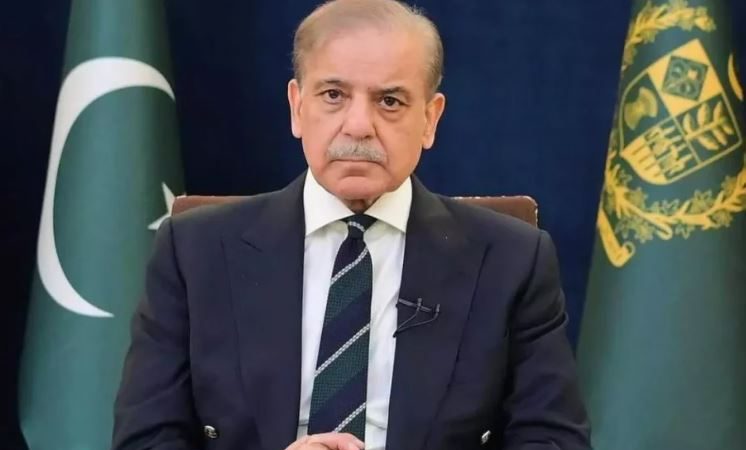
ISLAMABAD, Nov 29 (DNA): Prime Minister Muhammad Shehbaz Sharif, Sunday, emphasized the need for national dialogue, political harmony, and close coordination between the federal and provincial governments to advance Pakistan’s socio-economic development agenda, while stressing continuity in structural reforms, population management, youth empowerment, and export-led growth.
Addressing participants of the National Security Workshop, the prime minister said the government had inherited numerous economic challenges but, through sincere efforts and difficult policy decisions, succeeded in stabilizing the national economy.
He noted that Pakistan’s gross domestic product (GDP) growth for the current year was projected at 3.5 percent and stressed the need to raise it to at least six percent at the earliest possible time.
Expressing satisfaction over the country’s foreign exchange reserves, he termed them among the highest in Pakistan’s history. However, he cautioned that sustained progress would require continuous hard work, honesty and mutual trust.
The prime minister said exports had increased by eight percent during the first quarter of the current fiscal year, describing it as encouraging but adding that much more needed to be done. He highlighted the significant growth in the information technology sector, stating that IT exports had reached $4.6 billion by the end of the year, compared with around $1.5 billion three years ago.
Calling agriculture the backbone of the economy, Prime Minister Shehbaz Sharif regretted that the sector had not received the attention it deserved over the past eight decades.
He stressed the need for a comprehensive transformation of agriculture and livestock, describing the latter as a major untapped economic resource.
“We have the potential to transform our economy through agriculture within a short period if we adopt the right policies and work diligently,” he said.
The prime minister also underscored the importance of harnessing the country’s youthful population, describing it as both a challenge and an opportunity.
He called for equipping young Pakistanis with education, information technology, artificial intelligence, vocational skills and professional training to prepare them for future economic demands.
He said around 60 percent of Pakistan’s population comprised young people and stressed that investing in their capabilities would be more valuable than the natural resources buried beneath the country’s mountains.
Referring to the poetry and philosophy of Allama Muhammad Iqbal, the prime minister highlighted the virtues of hard work, sincerity of purpose and self-reliance as essential ingredients for national progress.
On structural reforms, the prime minister said significant changes had been introduced in the Federal Board of Revenue (FBR) during the last two and a half years.
He remarked that the institution had historically failed to adequately support the country’s economic agenda due to corruption and collusion within its ranks.
He said the government had undertaken unprecedented efforts to remove corrupt elements from the FBR and strengthen its enforcement mechanisms.
The prime minister noted that tax evasion, particularly in indirect taxes such as sales tax, had caused massive losses to the national exchequer.
He said that during fiscal year 2025-26, authorities recovered Rs900 billion through enforcement measures, describing it as a landmark achievement.
According to him, nearly Rs2 trillion had previously been lost through corruption, collusion and tax evasion.
He questioned whether any previous government had succeeded in recovering such substantial amounts from illicit practices.
Recalling a meeting with the Managing Director of the International Monetary Fund (IMF) during a visit to New York in September, the prime minister said she had praised Pakistan’s reform efforts and described them as transformative.
Quoting her remarks, he said the IMF chief had acknowledged that Pakistan had changed significantly and expressed surprise at the pace at which reforms had been implemented.
The prime minister reiterated that sustained hard work, transparency and institutional reforms were essential for ensuring long-term economic stability and prosperity.
Related News
Senator M Aurangzeb inaugurates Saylani Ibn-e-Adam IT Park
KARACHI, 29 NOV (DNA) — Federal Minister for Finance and Revenue Senator Muhammad Aurangzeb hasRead More
PM calls for national dialogue, structural reforms
ISLAMABAD, Nov 29 (DNA): Prime Minister Muhammad Shehbaz Sharif, Sunday, emphasized the need for nationalRead More
Comments are Closed