

Magnolia’s Foreign Policy Lesson for Pakistan
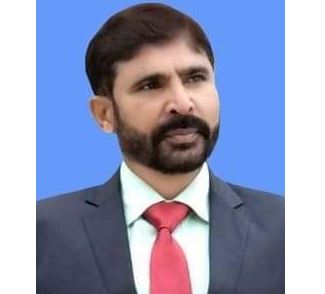
Dr. Muhammad Akram Zaheer
The intensifying competition among major powers has created difficult choices for smaller countries. As the United States and China compete for economic, technological and strategic influence, while Russia seeks to maintain its regional position, states with limited economic and military capabilities face growing pressure to adjust their foreign policies. Some are compelled to choose sides, while others attempt to maintain relations with competing powers without surrendering their independence. Mongolia offers an instructive example of how a small state can navigate such circumstances. Located between Russia and China, two major powers with considerable political, economic and military influence, Mongolia has little geographical room to manoeuvre. Its position is particularly challenging because its economy depends heavily on trade with its neighbours, while its security and sovereignty remain closely connected to the regional balance of power.
Yet Mongolia has pursued a foreign policy that seeks to avoid excessive dependence on either neighbour. Its experience demonstrates that geographical constraints do not necessarily eliminate diplomatic choices, provided a country understands its limitations and uses the available opportunities carefully. Mongolia’s approach is not based on confrontation with its neighbours. Rather, it combines practical cooperation with China and Russia, diplomatic engagement with other international partners, and participation in multilateral institutions. This policy has become widely associated with the country’s strategic balancing and its Third Neighbour Policy.
The Third Neighbour Policy emerged following Mongolia’s democratic transition in 1990. After decades of close dependence on the Soviet Union, the country sought to establish relations with Western democracies and other Asian powers. The objective was not to replace one dominant partner with another, but to widen its diplomatic options. The United States, Japan, South Korea, India and European countries became important partners. Mongolia also developed closer relations with international organisations and participated in United Nations peacekeeping operations. These engagements helped the country establish an international identity beyond its immediate neighbourhood. Its strategic partnerships with Russia, Japan, China, India and the United States reflect an effort to maintain a broad diplomatic network rather than depend on a single external power.
One of Mongolia’s most important diplomatic achievements has been its ability to maintain relations with both China and Russia despite their growing strategic cooperation. Beijing is Mongolia’s largest trading partner, while Moscow remains a major source of energy supplies. Their geographical proximity makes economic engagement unavoidable. Any serious deterioration in relations with either neighbour could create significant economic difficulties. The figures illustrate the scale of this dependence. According to a September 2026 assessment by the US Congressional Research Service, China accounted for approximately 89 per cent of Mongolia’s exports in 2025, while Russia supplied more than 94 per cent of its petroleum imports. These figures reveal the limits of diplomatic independence when economic relationships remain heavily concentrated.
Mongolia’s conduct during the Ukraine war provides another illustration of this delicate balancing act. In September 2024, President Vladimir Putin visited Mongolia despite an International Criminal Court arrest warrant against him. Mongolia, as an ICC member, faced an uncomfortable diplomatic and legal dilemma. It did not arrest the Russian president, demonstrating the practical constraints imposed by its relationship with Moscow. At the same time, Mongolia has avoided fully endorsing Russia’s position on the war. Its approach to international resolutions and sanctions has reflected the difficulty of reconciling international obligations with immediate economic and geographical realities. Such decisions may attract criticism, but they also demonstrate how smaller countries attempt to protect their national interests when the consequences of confrontation are far greater for them than for major powers.
However, Mongolia’s experience should not be presented as an unqualified success. Its Third Neighbour Policy has widened diplomatic opportunities, but it has not fundamentally changed the country’s economic geography. Most of its mineral exports still depend on the Chinese market, while its energy requirements remain closely connected to Russia. The concentration of exports in mining also exposes the economy to fluctuations in international commodity prices and changes in Chinese demand. The International Monetary Fund has identified economic diversification as an important priority for Mongolia. Its dependence on coal is particularly significant because China’s transition towards cleaner energy could affect the long-term prospects of one of Mongolia’s major export industries. This makes diversification not merely an economic objective but also a matter of national security.
The lesson is that diplomatic diversification cannot succeed without economic diversification. A country may establish strategic partnerships with ten different states, but if its exports, energy supplies, transport routes and financial stability depend on one or two neighbours, its freedom of action will remain restricted. Mongolia has also used multilateral diplomacy to strengthen its international position. Its declaration of nuclear-weapon-free status in 1992 was an important step towards establishing an independent security identity. It has also maintained a policy of non-alignment and avoided joining military alliances that could unnecessarily complicate relations with its neighbours. For a country with limited military capabilities, international recognition, diplomatic engagement and participation in multilateral institutions can provide additional protection. These instruments cannot replace military strength, but they can increase the political costs of violating another country’s sovereignty.
There are important lessons here for Pakistan as well. Pakistan’s geographical position, security concerns and economic relationships have repeatedly placed it at the centre of competing international interests. Its relations with China, the United States, Russia, the Gulf countries and Central Asian states require careful management. The challenge is not to abandon established partnerships but to ensure that no single relationship becomes so dominant that it limits the country’s foreign policy choices. Pakistan’s engagement with China through the China-Pakistan Economic Corridor, its historical security relationship with the United States, its developing ties with Russia and its economic connections with the Gulf illustrate the complexity of its external environment. However, maintaining multiple relationships requires more than diplomatic visits and political declarations. It demands economic strength, institutional continuity, political stability and a foreign policy based on clearly defined national interests.
Mongolia also demonstrates that strategic autonomy should not be confused with neutrality on every international issue. Small states cannot avoid taking positions indefinitely. They must distinguish between matters involving fundamental national interests and disputes in which direct involvement would bring unnecessary costs. This requires diplomatic consistency, political maturity and a realistic understanding of the balance of power. Ultimately, Mongolia’s experience reveals that small states are not necessarily condemned to become instruments of great-power competition. Their influence may be limited, but they can still exercise meaningful diplomatic choice through economic diversification, multilateral engagement and carefully managed relationships.
The most important lesson is that sovereignty is not secured simply by maintaining friendly relations with powerful countries. It depends on the ability to make independent decisions when external pressure becomes difficult to resist. For Mongolia, this remains an ongoing challenge. For other small and medium-sized states, including Pakistan, it offers a valuable lesson in the difficult art of surviving between powerful neighbours without surrendering national independence.
Dr. Muhammad Akram Zaheer
Assistant Professor Pakistan Studies
Imperial College of Business Studies Lahore
Related News
Magnolia’s Foreign Policy Lesson for Pakistan
Dr. Muhammad Akram Zaheer The intensifying competition among major powers has created difficult choices forRead More

GSP+: A cornerstone of Pakistan’s export success
Analysis Ansar Mahmood Bhatti Pakistan’s Generalised Scheme of Preferences Plus (GSP+) arrangement with the EuropeanRead More
Comments are Closed