

Indus Delta’s slow disaster
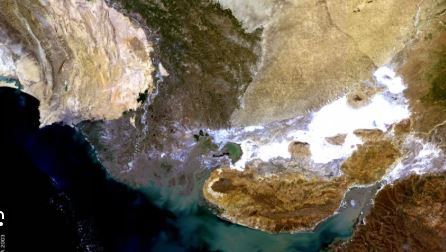
Shrinking river flow threatens coastal communities: Study
TANDO JAM
Research scholar Fazul Ullah presented his M.Phil. research seminar on community adaptation to climate-induced disasters in the Indus Delta at Sindh Agriculture University, Tando Jam.
The study finds that the steady loss of fresh water and silt reaching the Indus Delta is the most dangerous and least noticed disaster facing its coastal communities. The field research covered 396 households in Thatta, Sujawal and Badin districts and reviewed 50 years of records.
According to the study, the flow below Kotri Barrage has fallen from about 40 million acre-feet (MAF) a year before 1995 to under 18 MAF since. Silt has dropped from about 82 to 13 million tonnes a year. As a result, the sea is advancing, farmland is turning saline, and mangroves and fisheries are declining.
The study pays special tribute to water expert Naseer Memon, Indus Delta expert Akhtar Hussain Samoo, and former Vice Chancellor of the University of Sindh, Khalil-ur-Rehman Khoombhati, whose insights shaped its central message. “When we talk of a delta, we essentially talk of flows of fresh water and sediment,” said Naseer Memon. “Adaptation is not a voluntary choice by anybody… It’s a compulsion.”
The study calls for a guaranteed minimum flow below Kotri, a network of roads within the delta, and a shift from relief to risk reduction.
The researcher thanked his supervisors, Prof. Dr. Ghulam Mujtaba Khushk, Associate Prof. Dr. Javaid Ahmed Shaikh and Prof. Dr. Aijaz Ahmed Khooharo for their guidance and encouragement.
Related News

Will Trump and Netanyahu Be Able to Overcome Their Political Challenges?
By: Muhammad Rafi The ongoing war in the Middle East is no longer merely aRead More

The Need for Building Truly Inclusive Classrooms for Visually Impaired Students
By: Ayla Danish Education is often called the key that unlocks potential and breaks downRead More
Comments are Closed