

President warns escalation involving Iran could destabilize region
DNA
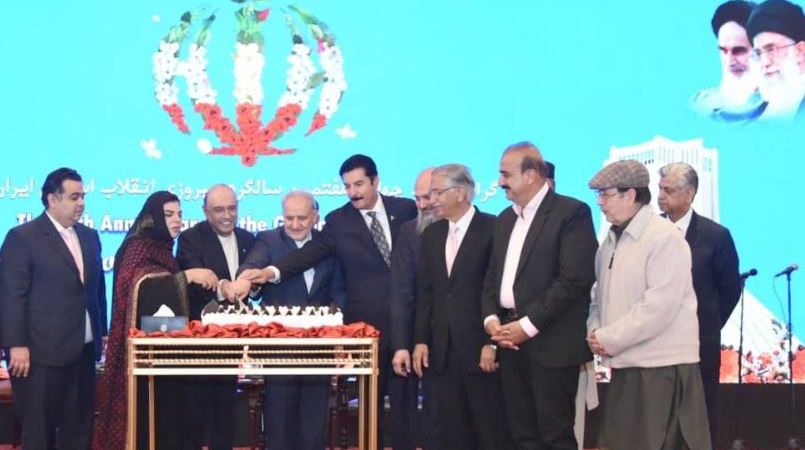
ISLAMABAD, President Asif Ali Zardari on Wednesday welcomed the efforts aimed at easing tension and promoting regional peace, warning that any military escalation involving Iran could destabilise the Gulf region, South Asia and Western Asia.
“Any instability involving Iran, or any attempt to resolve issues through military means, carries grave risks. Such actions could …, undermine global peace, and cause serious harm to the global economy. The stakes are far too high for confrontation,” The president said while speaking at a reception hosted by the embassy of Iran to celebrate 47th anniversary of Iran’s National Day.
He said Pakistan opposed unilateral sanctions and coercive measures, including against Iran, and believed that peaceful engagement best served regional and global security.
“Pakistan welcomes efforts aimed at easing tensions and encourages continued dialogue among relevant parties in a constructive spirit, with the objective of promoting peace and stability in the region,” he added.
Earlier, the president requested the participants to observe one minute of silence in memory of the victims of the recent blast in Islamabad, and the tragedies in Iran. “Let’s pray that wars never come to us,” the president prayed.
Referring to the ongoing conflicts, terrorism, external interference and unresolved regional flashpoints in the region, the president said Pakistan firmly believed that such challenges could not be addressed through force or unilateral actions.
President Zardari emphasized that Pakistan and Iran shared responsibilities as neighbouring countries and remained committed to cooperation on border management, counter-terrorism, and turning the shared frontier into a zone of cooperation, lawful trade and development.
He said Pakistan valued balanced relations globally and remained ready to play a constructive role in promoting restraint, dialogue and regional peace.
The president extended his warm congratulations to the leadership and people of Iran. “May our partnership continue to grow, and may our region move towards security, stability and shared prosperity,” he prayed.
He said Pakistan and Iran were not only neighbours; but also civilisational partners. “Our shared border reflects centuries of interaction, coexistence and mutual respect. Our relationship is rooted in faith, history and enduring cultural bonds that continue to shape our region.”
He noted that the Persian language and its great literary tradition had profoundly influenced Pakistan’s intellectual life. For hundreds of years, he said Persian served as the official language of large parts of the regions that now form Pakistan.
“Its influence remains deeply embedded in our national consciousness. Pakistan’s national anthem itself reflects the deep imprint of the Persian language on our collective identity.”
He said long before the time of Allama Muhammad Iqbal, our great Haft Zaban poet, Sachal Sarmast, the renowned 18th-century poet of Sindh, was composing profound poetry in Persian, reflecting a shared spiritual and philosophical space.
Poets and thinkers such as Rumi, Hafiz, Saadi and Ferdowsi are widely respected in Pakistan, while Iqbal, who wrote much of his work in Persian, remains a shared symbol of dignity and renewal for both our societies, he added.
In his welcome address, Ambassador of Iran to Pakistan Dr Reza Amiri Moghaddam said that despite facing various external pressures and challenges, Iran had made remarkable progress in key sectors including technology, defence, science and the economy. He noted that the Iranian nation had consistently demonstrated resilience and self-reliance, turning challenges into opportunities and continuing its development journey with determination.
The ambassador reiterated that Iran did not seek war and believed in resolving disputes through dialogue and diplomacy. However, he made it clear that if war was imposed, Iran would fully retaliate in defence of its sovereignty. He also referred to the visit of the Prime Minister Shehbaz Sharif during which multiple agreements and Memorandums of Understanding were signed in various sectors. He also expressed appreciation to the government and people of Pakistan for their support, particularly during Israeli aggression against Iran.
Related News

Petrol price increases by Rs3.40, HSD by Rs6.72 per litre
ISLAMABAD: The government on Wednesday raised the prices of petrol and high-speed diesel (HSD) byRead More
IMF Austerity Cuts Quadrupled Over Past Decade
IMF-required austerity cuts quadrupled over past decade, and new Fund policy is poised to pushRead More
Comments are Closed